The Arrival
In 1951, Cheltenham's character changed forever. The Government Communications Headquarters, or GCHQ, moved from Eastcote in northwest London and established itself across two sites in the town: Oakley and Benhall. The decision to settle here was not arbitrary; Cheltenham had served as the location for US Army Services of Supply headquarters during the Second World War, which had built significant telecommunications infrastructure in the region.
The Doughnut Takes Shape
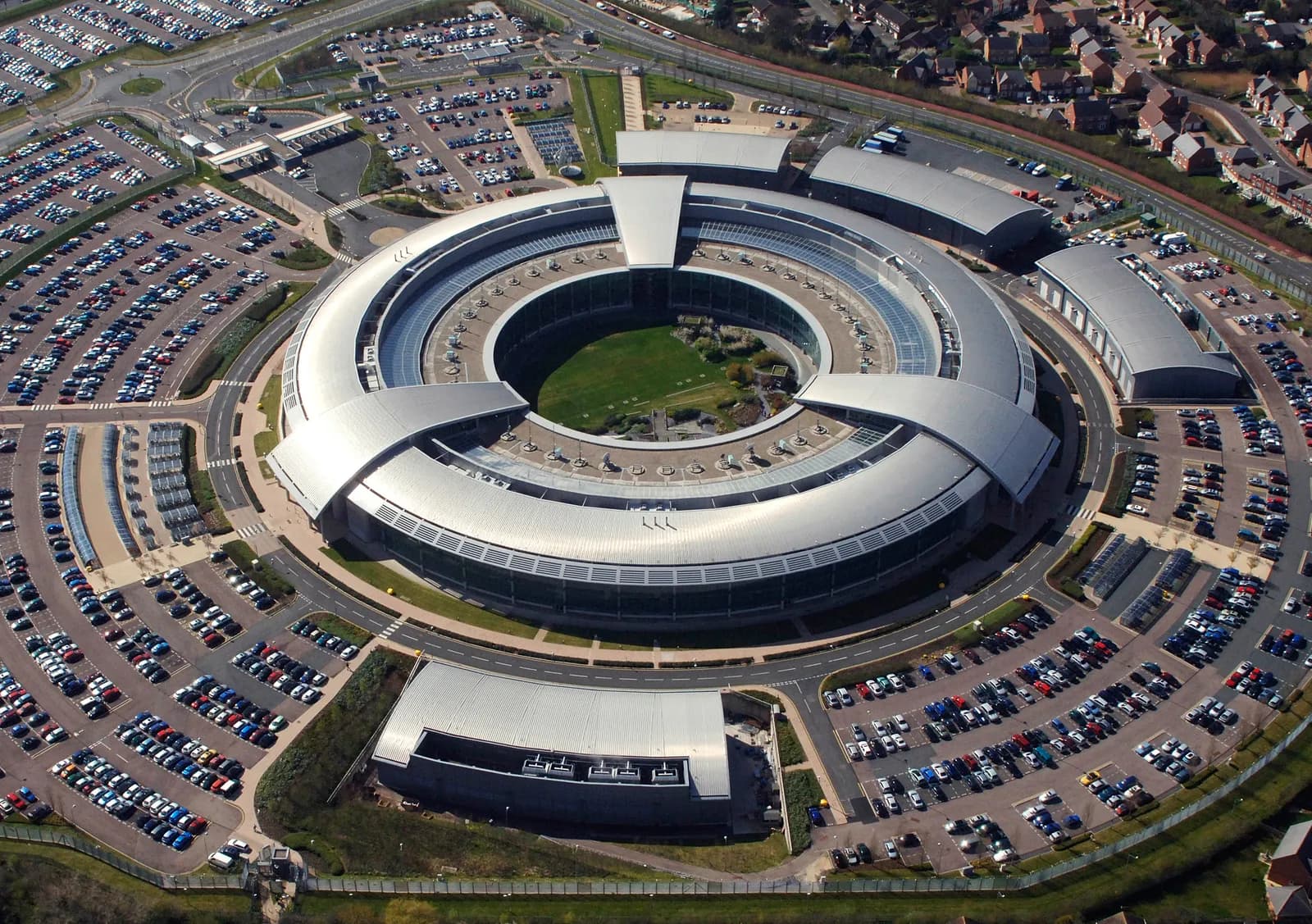
The building that would come to define both GCHQ and Cheltenham's skyline began construction in 2000. The circular headquarters, universally known as "The Doughnut," was completed in 2003 and officially opened by Queen Elizabeth II and the Duke of Edinburgh in 2004. The building cost £337 million to construct, part of a £1.2 billion private finance initiative contract.
Architect Chris Johnson of Gensler designed the 200-metre diameter structure to rise just 21 metres high across four storeys, accommodating 5,500 employees within 140,000 square metres of floor space. The design is striking: a perfect circle surrounding a central courtyard large enough to contain the Royal Albert Hall. The courtyard garden serves as a memorial to GCHQ staff killed on active service.
The construction required remarkable logistics. Carillion, the main contractor, installed 1,850 miles of fibre optic cables and 6,000 miles of electrical wiring. The building incorporates steel, aluminium, granite, and local Cotswold limestone. Below the courtyard lie banks of supercomputers that form the operational heart of British signals intelligence.
Economic Engine of Gloucestershire
GCHQ is the largest single employer in Gloucestershire. The agency consolidated operations from more than 50 buildings into The Doughnut, with the last staff transferring from the Oakley site in late 2011. The impact on local employment has been substantial; by 2010, Cheltenham's unemployment rate stood at 2.7 per cent compared to a national figure of 7.9 per cent.
The organisation currently employs 7,181 people according to the Intelligence and Security Committee's 2021-2022 report. This concentration of skilled workers has shaped the local economy, from housing demand to service industries. The presence has not been without friction; staff parking on residential roads in Benhall has caused documented annoyance among local residents.
From Shadows to Community
GCHQ's relationship with Cheltenham has evolved considerably. Where once the agency operated in strict secrecy, it now maintains a public-facing presence. The organisation holds a Community Day approximately every 18 months to highlight charitable and volunteer work by staff in the local area.
GCHQ has become a regular fixture at the Cheltenham Science Festival, established in 2002, where its interactive displays in the Discover Zone offer hands-on activities. The agency runs a STEM Ambassador programme, hosts summer schools for teenagers at UK sites, and organises language taster sessions and a National Language Competition, with winners invited to visit The Doughnut. Staff participate in workshops teaching codebreaking and problem-solving, and the agency partners with local schools for interview practice and paired reading schemes.
Public Statements in Steel and Light
The Doughnut itself has become a canvas for public statements. In October 2014, 1,308 GCHQ staff formed a giant red poppy measuring 38 metres by 28 metres to support the Royal British Legion Poppy Appeal. The building has been illuminated in yellow for the Guide Dogs for the Blind Association and in rainbow colours for the International Day Against Homophobia, Transphobia and Biphobia in 2015 and 2018.
The Turing Connection
Though Alan Turing never worked in Cheltenham, his legacy is intertwined with GCHQ's history. Turing led Hut 8 at Bletchley Park during the Second World War, breaking German naval codes and devising techniques that defeated the Enigma machine. The Government Code and Cypher School, GCHQ's predecessor, operated at Bletchley Park. Modern GCHQ regards itself as the inheritor of Turing's innovations in cryptanalysis and computing.
Security and Symbolism
The Doughnut operates under strict security protocols. The site is protected by a two-metre metal fence, multiple vehicle checkpoints, CCTV coverage, and an underground road. It is a designated protected site under the Serious Organised Crime and Police Act 2005.
This tension between secrecy and visibility has occasionally manifested in local culture. In 2014, a Banksy artwork appeared in Cheltenham depicting three men in trench coats listening to a telephone box, a clear reference to GCHQ surveillance activities. The piece was removed in 2016.
The Design Philosophy
The building's circular design serves a purpose beyond aesthetics. It facilitates communication; any employee can reach any other within five minutes. The current Director, Anne Keast-Butler, has no separate office; her desk sits within shouting distance of her lawyers, reflecting an organisational culture that values proximity and rapid information exchange.
What Remains Secret
Despite increased openness, much of GCHQ's work remains classified. The agency's budget falls within the Single Intelligence Account, which received £3.711 billion in 2021-2022. Its operations in cyber security, counter-terrorism, and foreign intelligence gathering continue behind the reflective glass and Cotswold stone of The Doughnut.
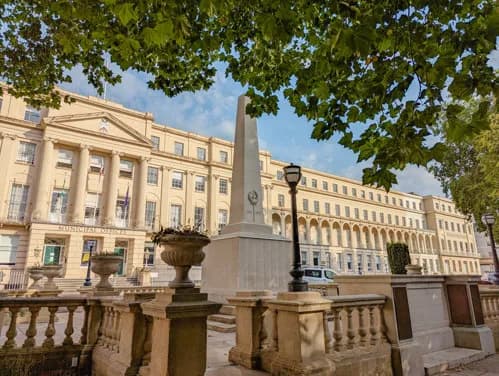
Cheltenham has adapted to hosting this peculiar institution. The town that built its reputation on mineral springs and Regency architecture now finds itself the unlikely capital of British signals intelligence. The Doughnut sits in our midst, a daily reminder that ordinary streets and extraordinary secrets can coexist.