Edward Adrian Wilson remains one of Cheltenham's most celebrated sons. Born on 23 July 1872 in the town where his father practised medicine, he would become a physician, naturalist and artist whose Antarctic explorations ended in tragedy on the ice shelf that now bears his name.
Early Life in Cheltenham
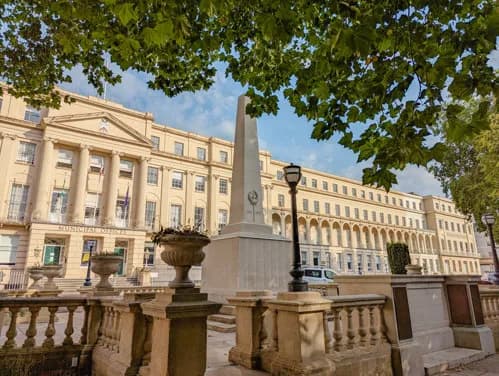
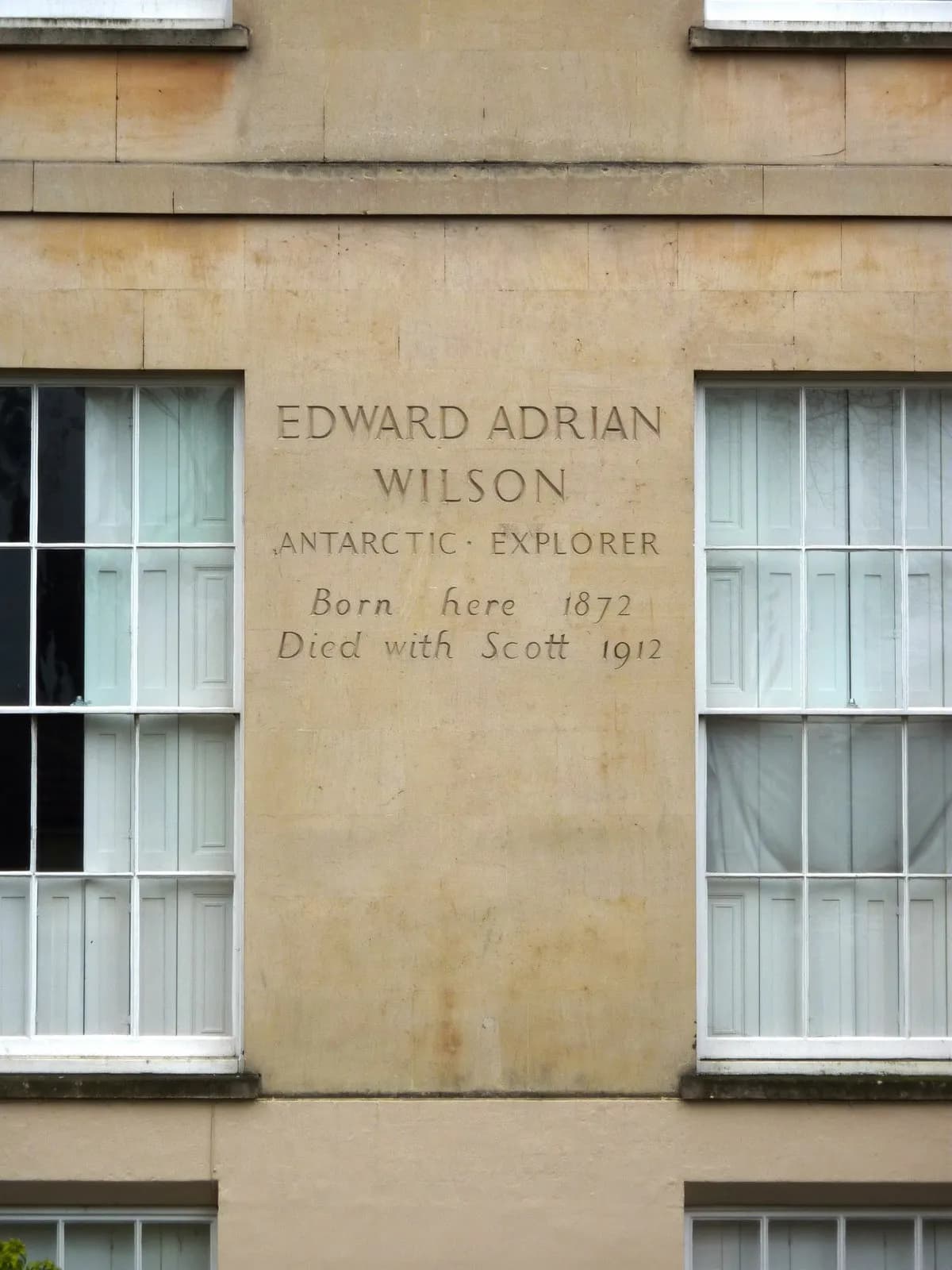
Wilson was born at Westal, the family home on Montpellier Parade, the second son of Dr Edward Thomas Wilson and Mary Agnes Whishaw. His father was a pillar of Cheltenham society, instrumental in founding the town's Camera Club, museum, library, fever hospital, district nursing organisation and clean water provision. Young Edward spent much of his childhood at The Crippetts farm in nearby Shurdington, where by the age of nine he had declared his intention to become a naturalist.
He attended Cheltenham College as a day pupil after failing to secure a public school scholarship. The college would later name one of its houses Westal in honour of his family home. From Cheltenham, Wilson progressed to Gonville and Caius College, Cambridge, where he graduated with a first-class degree in Natural Sciences in 1894.
Medical Training and Early Career
Wilson qualified in medicine at St George's Hospital Medical School in London in 1900. The following year, he was appointed junior house surgeon at Cheltenham General Hospital. In July 1901, just three weeks before departing for Antarctica, he married Oriana Fanny Souper.
His medical career was almost derailed when he contracted pulmonary tuberculosis during mission work in Battersea. The disease, which often proved fatal in that era, threatened to end his ambitions. Wilson recovered through sheer determination and an outdoor regimen, a resilience that would prove essential in the years to come.
The Discovery Expedition (1901–1904)
Wilson joined Captain Robert Falcon Scott's first Antarctic expedition as junior surgeon, zoologist and expedition artist. The Discovery set sail on 6 August 1901 and reached Antarctica that January.
In November 1902, Wilson accompanied Scott and Ernest Shackleton on a southern march that would set a new record. The three men reached latitude 82°17'S, some 300 miles farther south than any previous expedition. Their return journey lasted 93 days and covered 960 miles through brutal conditions. They returned to base in February 1903, frostbitten and exhausted but triumphant.
During this expedition, Wilson's artistic talents became apparent. He produced detailed watercolours of Antarctic landscapes and wildlife with scientific precision that complemented his zoological observations. Over his lifetime, he would create more than 200 watercolours of British birds and 150 Antarctic paintings. The largest collection is held at the Scott Polar Research Institute in Cambridge.
The Terra Nova Expedition (1910–1913)
When Scott planned his second Antarctic expedition, Wilson was the natural choice as chief of the scientific staff. The Terra Nova departed from Cardiff on 15 June 1910, carrying a team determined to reach the South Pole and conduct comprehensive scientific research.
Wilson's most extraordinary feat during this expedition came in the Antarctic winter of 1911. With Henry Robertson Bowers and Apsley Cherry-Garrard, he undertook a 60-mile trek to Cape Crozier to collect emperor penguin eggs. Travelling in temperatures as low as minus 70 degrees Fahrenheit (minus 57 degrees Celsius), the three men endured conditions that Cherry-Garrard later described as the worst journey in the world. They returned on 1 August 1911 with three eggs, their clothing frozen solid, having advanced scientific understanding of penguin embryology.
The Race to the Pole
On 1 November 1911, the main polar party set out. Wilson was selected as one of the five men who would make the final push to the South Pole. The others were Scott, Bowers, Lawrence Oates and Edgar Evans.
They reached the Pole on 18 January 1912, only to discover that Roald Amundsen's Norwegian expedition had claimed victory five weeks earlier. A dispirited Wilson recorded in his diary: "Great God! This is an awful place and terrible enough for us to have laboured to it without the reward of priority."
The Return Journey and Death
The 800-mile return journey proved catastrophic. Evans died on 17 February 1912 after a fall. Oates, suffering from severe frostbite, walked out of the tent into a blizzard on 16 March 1912, sacrificing himself in the hope that his companions might survive.
Wilson, Scott and Bowers were halted by a ferocious blizzard on 20 March, just 11 miles short of the One Ton Depot where supplies awaited. They died in their tent on or shortly after 29 March 1912. Scott's final diary entry praised Wilson as "the finest character I ever met."
Search parties found their bodies on 12 November 1912. The three men were buried where they fell, beneath a snow cairn topped with a ski cross.
Legacy in Cheltenham
Wilson's sacrifice resonated throughout Britain, but nowhere more deeply than in his home town. Within two years, a bronze statue had been erected on The Promenade. Modelled by Scott's widow Kathleen Scott and unveiled on 9 July 1914 by Arctic explorer Sir Clements Markham, it remains a prominent landmark.
The town has honoured Wilson in numerous ways. The Edward Wilson flats stand in the Hesters Way area. Cheltenham College maintains the Westal house in memory of his family home. Wilson was posthumously awarded the Royal Geographical Society's Patron's Medal in 1913.
In September 2013, following a £6.3 million refurbishment, Cheltenham Art Gallery and Museum was renamed The Wilson. The gallery houses a dedicated Edward Wilson collection featuring his watercolours, drawings and family papers. Visitors can examine the artwork that documented a vanished Antarctic landscape and the personal effects of a man who left Cheltenham for the frozen south and never returned.
The Wilson stands on Clarence Street, welcoming visitors to explore the life of a Cheltenham doctor who became one of Britain's most revered explorers. His story, from the streets of Montpellier Parade to the eternal ice of Antarctica, remains a testament to scientific dedication, artistic talent and unflinching courage.