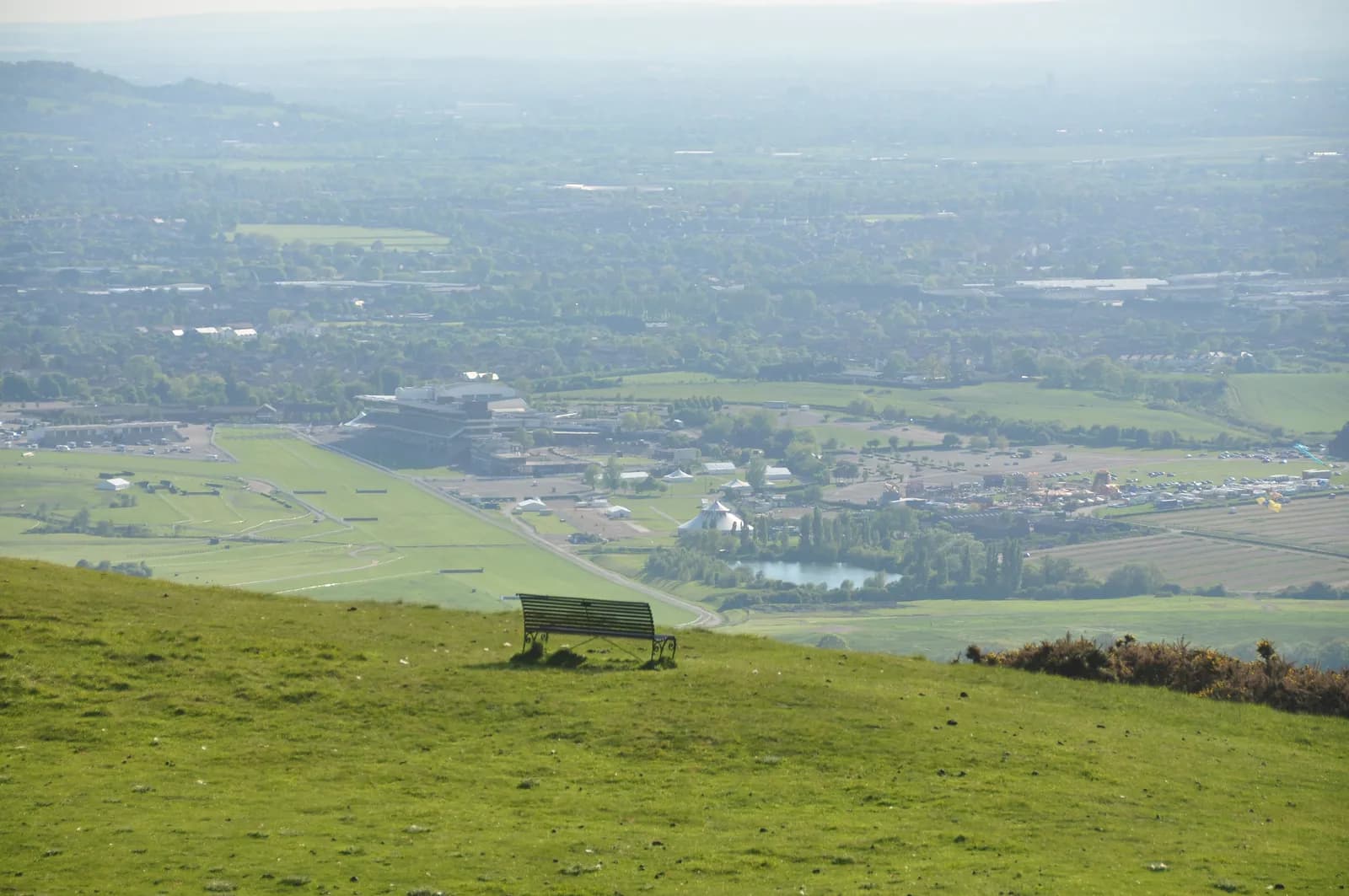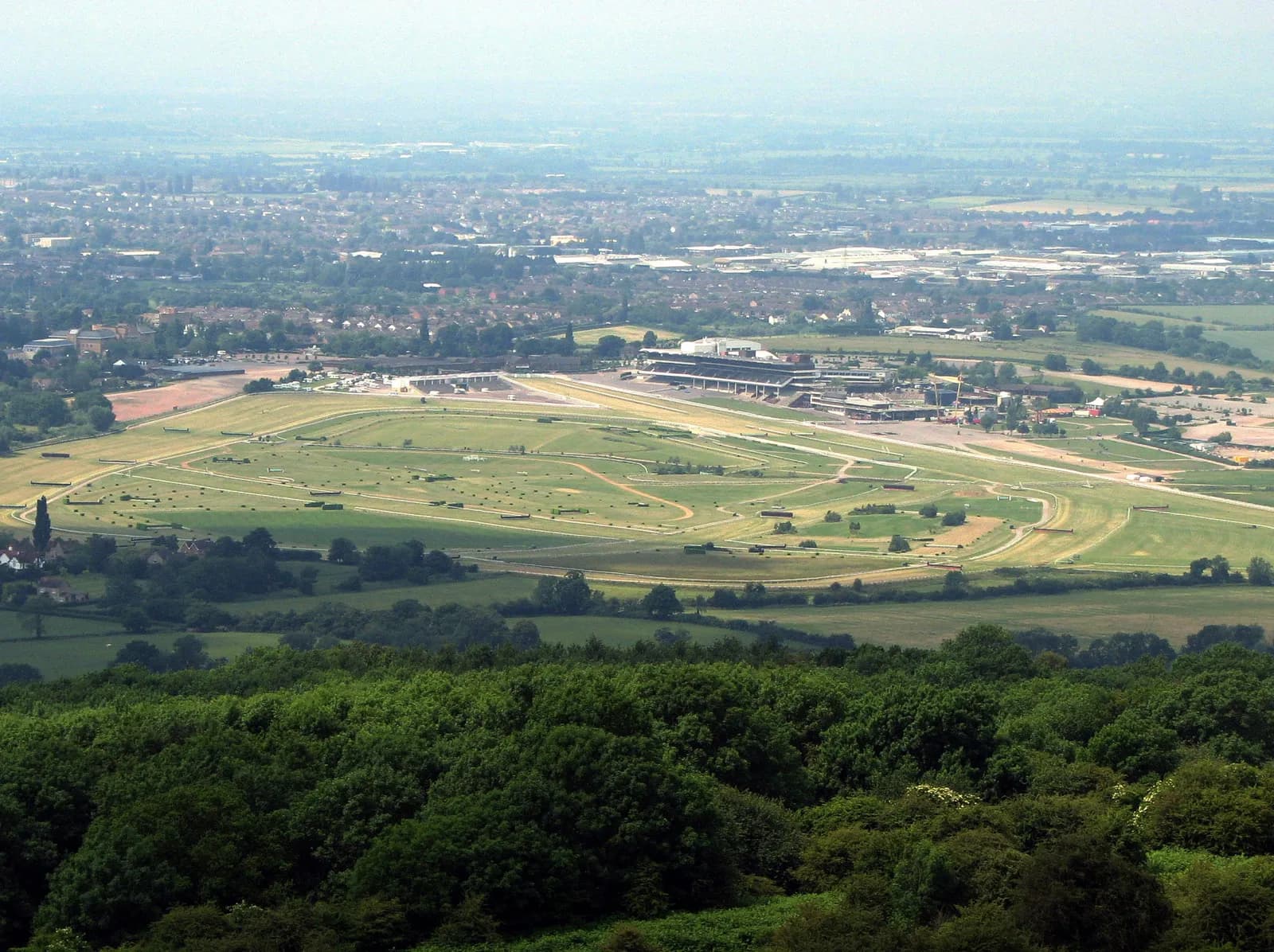
On a clear October afternoon the view from the grandstand at Prestbury Park takes in the entire view of Cleeve Hill, the Cotswold escarpment that forms a natural amphitheatre around the racecourse. It is the same hill where Cheltenham's racing began more than two hundred years ago, and for one weekend each autumn it frames the first chapter of a story that ends, every March, with the Cheltenham Gold Cup.
The October horse racing fixtures
October racedays run over two days:
Friday 23 October 2026
Saturday 24 October 2026
The racecourse describes it as the curtain raiser to its 2026/27 racing season. It is the first of Cheltenham's autumn and winter fixtures, followed by the November Meeting and then the December and New Year cards, all building towards the Festival in March.
From Cleeve Hill to Prestbury Park
Cheltenham's racing history begins with minor flat races on Nottingham Hill in 1815. The first racing on Cleeve Hill itself took place on Tuesday 25 August 1818, when the opening race was won by a horse called Miss Tidmarsh. The meetings caught on quickly. By the 1820s, according to the racecourse's own history, crowds of around 30,000 people were climbing the hill for the two-day July meeting, and a race called the Gold Cup was run on the flat there as early as 1819.
Not everyone in the growing spa town approved. The Reverend Francis Close, the evangelical incumbent of the parish church, preached against racing and its attendant gambling and drinking, and the 1830 meeting was disrupted by opponents. Before the following year's meeting, the grandstand had been burnt to the ground. Racing moved down to Prestbury, though not to the present course, and for a time it wandered: to Andoversford in 1840, and back to Prestbury in 1847.
The modern course owes most to William Adolphus Baring Bingham, who bought Prestbury Park in 1881 and kept it as a stud farm before beginning a successful race meeting there back in 1898. The Cheltenham Racecourse Company bought the estate in 1902, the year racing moved to the course as it is laid out today, and new stands were completed in 1914.
A decisive moment for jump racing came in 1911, when the National Hunt Committee settled the National Hunt Meeting at Prestbury Park. The meeting had begun at Market Harborough in 1860 and moved around the country. Once at Cheltenham, it stayed, and grew into the Festival we know today.
The Gold Cup and the horses who made it
The Cheltenham Gold Cup was first run as a steeplechase on 12 March 1924, won by Red Splash. The Champion Hurdle followed in 1927. The original 1924 trophy spent decades in private hands and bank vaults before Cheltenham was reunited with it in 2018.
Four horses above all have shaped the race's legend, and all four are remembered with statues at the course.
Golden Miller won five Gold Cups in a row from 1932 to 1936, a record that still stands. In 1934 he won the Gold Cup and then, seventeen days later, the Grand National, a double no other horse has achieved. His statue stands near the parade ring.
Arkle won three in a row from 1964 to 1966, the first after a famous duel with Mill House. By his third win he started at odds-on so short that the race was almost a formality.
Dawn Run, in 1986, became the only horse ever to win both the Gold Cup and the Champion Hurdle, ridden to the Gold Cup by Jonjo O'Neill after a finish that has become part of Cheltenham folklore.
Best Mate won three in a row from 2002 to 2004. After his death in 2005 his ashes were buried right beside the winning post.
In 2017 a statue of Sir AP McCoy joined them, the first figure of a person rather than a horse at the course. And in 2022 Rachael Blackmore became the very first woman to ride a Gold Cup winner, aboard A Plus Tard.
For the seasoned racegoer
Cheltenham has two left-handed courses running side by side, the Old Course and the New Course, plus a cross-country course in the middle. The Showcase is staged on the Old Course, which also hosts the November Meeting and the first two days of the Festival. Both courses are undulating, with a testing uphill run to the line that has turned many races in the final furlong. A horse that travels well turning in still has to climb.
The appeal of the Showcase lies in what it tells you about the months ahead. Stables bring horses who have been off since the spring, some making their debuts over fences, and the meeting is a first chance to see how last season's novices have strengthened over the summer. It pays to note which horses handle the track and the hill, because course form matters more at Cheltenham than at most venues, and the same horses often reappear in November and again in March. Read the race conditions on the card: they explain why a horse is running where it is.
Fitness is the big unknown in October. A trainer's record with horses first time out is worth knowing, and the paddock will often tell you more than the form book about which runners are ready and which are being brought along gently.
For a first visit
A raceday follows a simple rhythm. Before each race the runners are led round the parade ring, then the jockeys come out, mount and canter down to the start. After the race the winner returns to the winner's enclosure, and a short gap follows before the next race, normally around 30 minutes, sometimes more before bigger races like the Gold Cup. Most meetings have six or seven races.
The parade ring is the best free education in the sport of kings. Look for a horse that walks with purpose, carries a healthy coat and looks relaxed rather than sweating up or look agitated. Experienced watchers say a well-muscled hindquarter and a calm eye are worth more than a fancy name.
The course offers several enclosures for racegoers, including the Club enclosure in front of the main grandstand and the Best Mate enclosure on the far side of the track, which offer views of the racing from directly opposite the stands. Each gives access to different areas, so check what is included before you book. There is no strict dress code for most areas at the Showcase. Smart and warm is the sensible choice in late October, and flat or sturdy shoes are wise if you plan to walk on the grass.
On betting, the two main options are the Tote, where all stakes go into a pool shared among the winners, and the bookmakers in the betting ring, who offer fixed odds. An each-way bet is two bets in one: half on the horse to win and half on it to finish in the places, so it costs twice the unit stake. Set a budget before you arrive, treat any stake as the price of entertainment, and stop when it is spent.
Families are welcome. The racecourse runs an interactive trail and activities for younger racegoers on the Saturday, and its website sets out its admission arrangements for under-18s.
Making a day of it in Cheltenham
The racecourse sits about a mile north of the town centre, at the foot of Cleeve Hill. Cheltenham Spa railway station is on the western side of town, and the racecourse publishes its own advice on raceday buses, parking and walking routes. If you have time, walking back into town takes you through Pittville, the planned estate whose Pump Room, completed in 1830, still looks out over the park and lake.
Cheltenham's fortunes as a spa began with the discovery of a mineral spring in 1716 and were made by a royal visit from George III in 1788. The Regency terraces, ironwork balconies and broad avenues that followed are still the backbone of the town. The Promenade is the place to start, leading to the Imperial Gardens and on to Montpellier, where the caryatids of Montpellier Walk line the shopfronts.
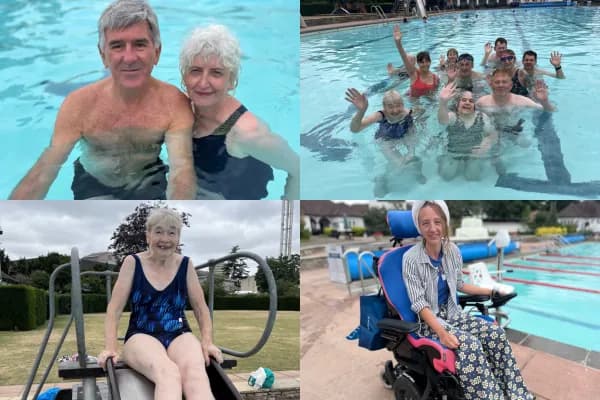
For something under cover, The Wilson on Clarence Street is the town's art gallery and museum, with a strong Arts and Crafts collection. Holst Victorian House, a short walk away, is the house where the composer Gustav Holst was born in 1874 and is furnished as a Victorian family home. Sandford Parks Lido and the town's many green spaces make good stops with children if the weather holds.
A morning on the Promenade, an afternoon at Prestbury Park and an evening back among the terraces makes for a day that belongs entirely to the town, and is a good way to show visitors that Cheltenham is more than one week in March.
Before you go
Check the Cheltenham Racecourse website for race times, tickets, enclosure details, travel advice and the latest going report before setting out. Jump racing depends on the weather, and fixtures can be lost to waterlogging or frost, so look for any inspection or abandonment notice on the morning of the meeting. I hope you will enjoy the opening of the jump racing season at Cheltenham.