A farm-based brewery near Cheltenham is combining renewable energy, locally grown barley and traditional English beer styles to reduce the environmental impact of every pint it produces.
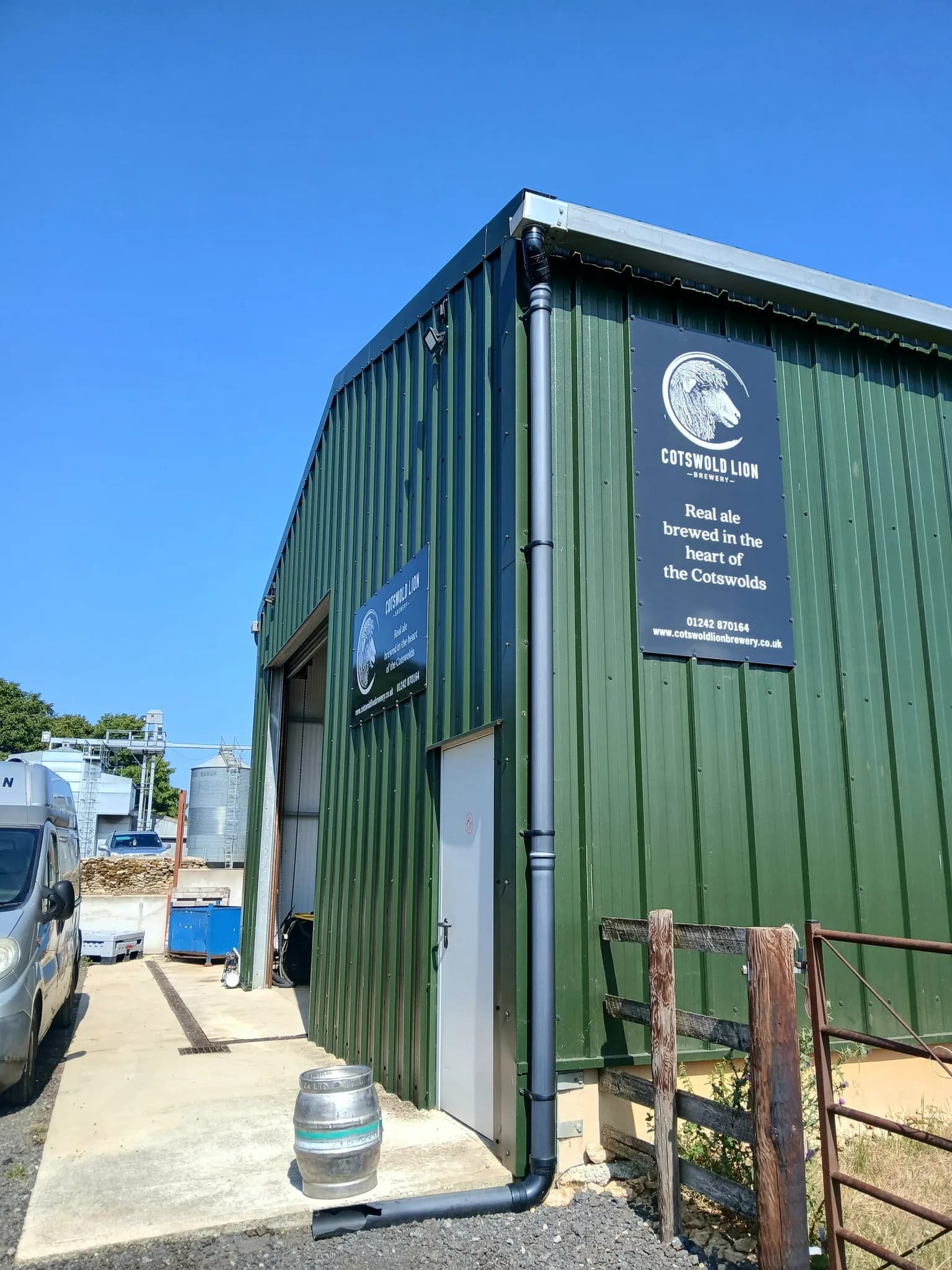
Located at Hartley Farm near Seven Springs, just south of Cheltenham, Cotswold Lion Brewery is powered largely by solar energy and uses ingredients sourced from the surrounding countryside.
The independent brewery was established in 2012 by Andy Forbes and takes its name from the Cotswold Lion, a local breed of sheep known for its long, golden-coloured fleece.
After beginning life in a converted grain store, the brewery moved to its current home at Hartley Farm in 2021. It changed ownership in 2024 when Forbes retired and sold the business to Dan Powell, whose grandfather was head brewer at the former Stroud Brewery before its closure in 1967.
Powell later appointed Don Burgess as head brewer, bringing more than 30 years of industry experience to the Cheltenham-area business.
For Burgess, the opportunity to work at a rural brewery powered by renewable energy and surrounded by many of its ingredients was particularly appealing.
“The concept of a solar-powered brewery using local resources and barley grown on the farm really ticked the right boxes,” he said.
Brewing with the power of the sun
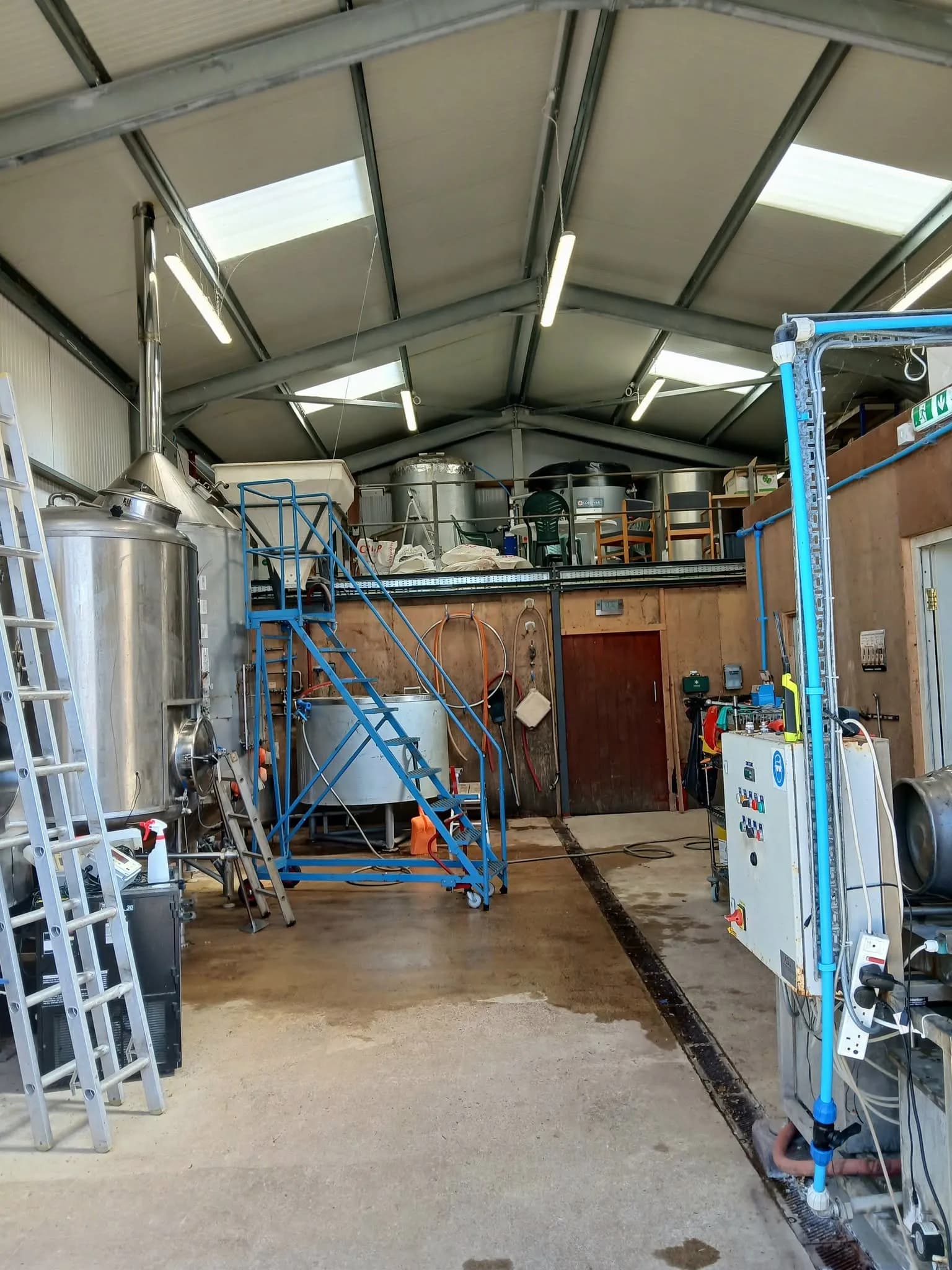
Almost 50kW of solar panels have been installed on the roof of one of Hartley Farm’s buildings. The electricity they generate helps power the brewing equipment, heat process water and boil the brewery’s 10-barrel copper.
The buildings are also heated using wood-chip biofuel, while heat and water produced during brewing are recovered and reused wherever possible.
A large heated water tank acts as what the team calls “the battery”, allowing energy generated during sunnier periods to be stored as heat rather than electricity.
“Not all batteries store electricity,” Burgess explained. “We use the energy to heat our process water and recover water from the heat exchanger after the wort has been chilled.”
The approach is intended to reduce both the brewery’s environmental impact and its operating costs at a time when energy prices and the cost of production remain significant challenges for independent businesses.
“Sustainable production means an improved bottom line, less environmental impact and reduced use of natural resources,” Burgess said.
“Being aware of energy use, recovering heat and taking steps to offset carbon production benefits everyone.”
Ingredients grown close to Cheltenham
The brewery’s local connections extend beyond its energy supply.
Barley is grown directly at Hartley Farm before being sent to Warminster Maltings for processing. Water is drawn from a well connected to the Seven Springs water system, close to one of the recognised sources of the River Thames.
The brewery also aims to use hops cultivated across Gloucestershire and the neighbouring counties of Herefordshire and Worcestershire.
Burgess believes English hops have been overshadowed in recent years by heavily promoted varieties imported from the United States and New Zealand.
While overseas hops remain popular among craft brewers, importing them can carry a substantially greater transport footprint. Burgess argues that using locally grown varieties can support British farmers while giving beers a flavour connected to the landscape in which they are produced.
“UK hops have huge potential because of their individual varieties and the conditions in which they are grown,” he said.
“New flavours and aromas are being developed all the time, but there are also excellent heritage varieties available much closer to home.”
A modern future for traditional ales
Rather than concentrating solely on increasingly strong or heavily hopped craft beers, Cotswold Lion Brewery is placing traditional English styles at the centre of its range.
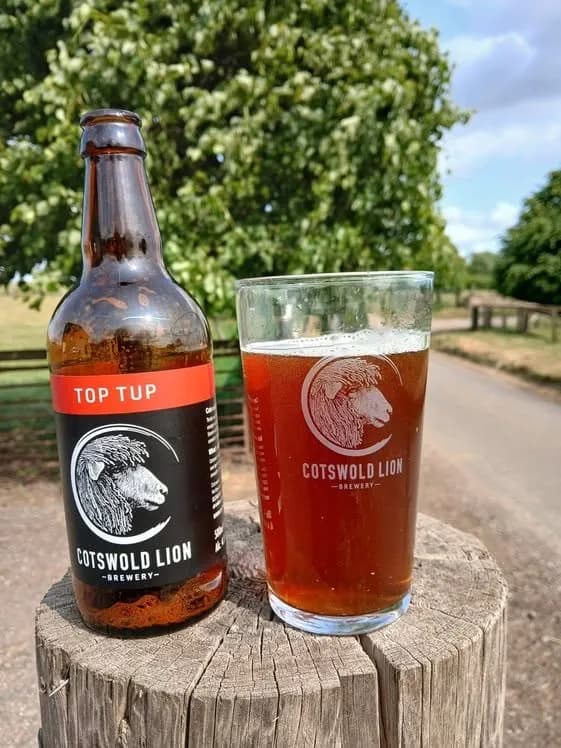
Its beers include Shepherd’s Delight, a 3.6% pale ale; Top Notch, a 4% session bitter; Golden Fleece, a 4.4% golden IPA; and Top Tup, a 4.8% extra special bitter.
Burgess believes traditional styles can remain relevant when brewers combine familiar flavours with modern ingredients and improved production techniques.
“Taking traditional styles and reinterpreting them through modern developments in hops and brewing has enabled huge improvements in quality and presentation,” he said.
His aim is to create beers that offer something distinctive without losing the balance and drinkability associated with classic British ales.
“I was fortunate to know a number of old-school brewers and learned many techniques from them — as well as a few things to avoid,” he added.
“I like creating something new and pushing the boundaries, but there should still be enough familiarity to encourage people to try the beer.”
Steady growth with quality at the forefront
The brewery’s ales are now appearing in pubs across Gloucestershire and the wider Cotswolds, with sales gradually expanding beyond the county.
However, Burgess says the team is determined not to grow more quickly than the brewery can manage.
Future plans include producing occasional limited-edition beers and holding more open days at Hartley Farm, giving people from Cheltenham and the surrounding area an opportunity to see how the brewing process works.
For now, the priority is to increase production steadily while maintaining quality and continuing to improve the brewery’s environmental performance.
“We have several plans up our sleeves and some interesting one-off beers in the brewing book,” Burgess said.
“But our standard sales are growing, so the immediate challenge is keeping the wheels on the wagon. It is easy to overpromise. We want to grow steadily, with quality at the forefront.”
By combining renewable energy, farm-grown barley, regional hops and traditional brewing knowledge, Cotswold Lion Brewery hopes to demonstrate that a distinctly local pint can also be a more sustainable one.